
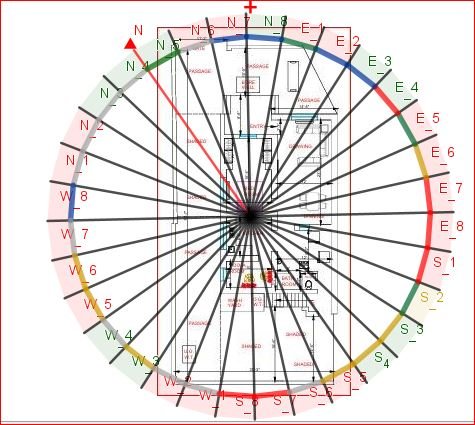
In Vastu, the 32 Pada refers to the division of the space around a building or plot into 32 specific zones or directions. Each of these zones is associated with specific energies and activities. The entire plot is divided in such a way that each zone is carefully analysed to determine its impact on the residents.
The correct placement of rooms or functions in these zones ensures positive energy flow and balance within the space.
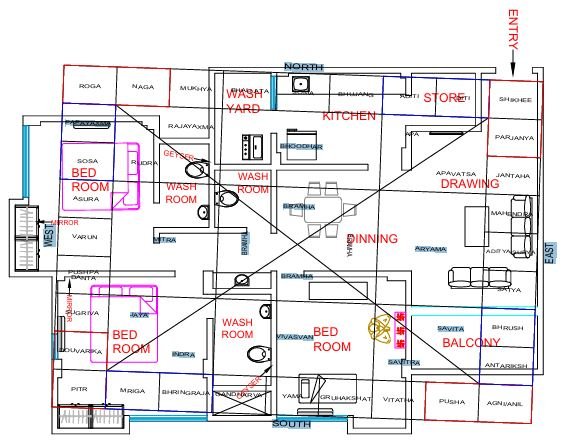
The 81 VPM refers to the 81 squares or zones in the Vastu Purush Mandala, which is the foundational diagram used in Vastu Shastra. This Mandala is essentially a blueprint for building designs and is used to analyze the spatial arrangement of the plot or structure.
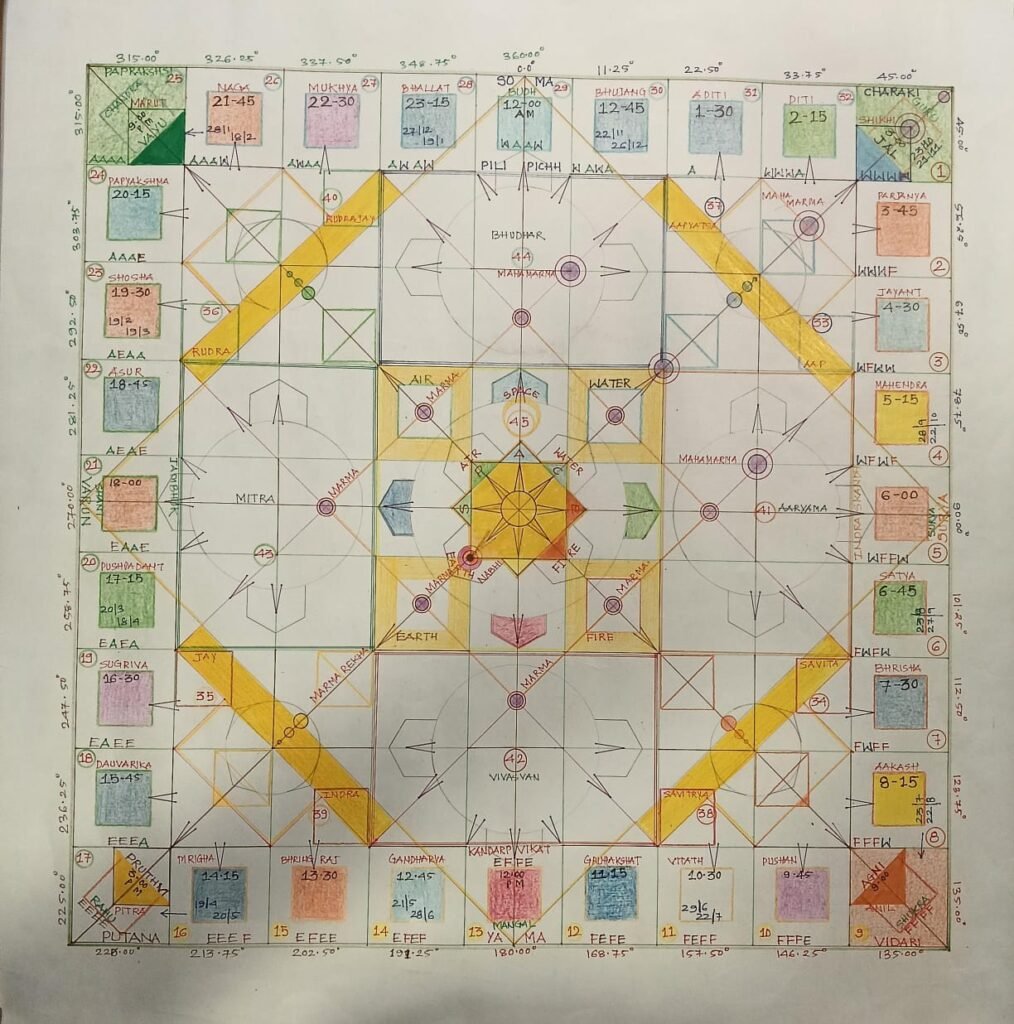
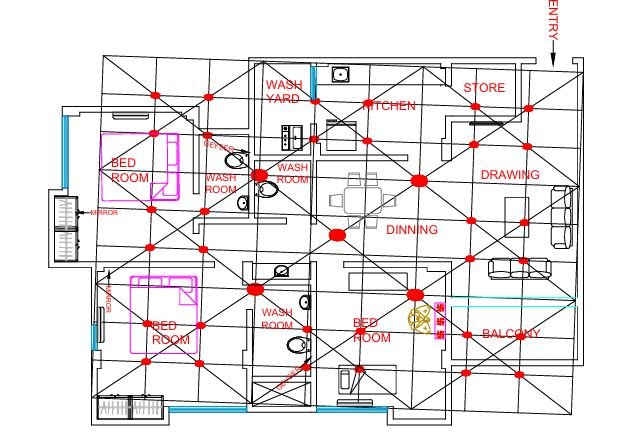
In Vastu, Marmsthan refers to areas or points in a building or plot that are particularly sensitive or vulnerable to negative energy. These are typically locations where there are energy blockages or structural imbalances that can lead to physical, emotional, or financial stress.
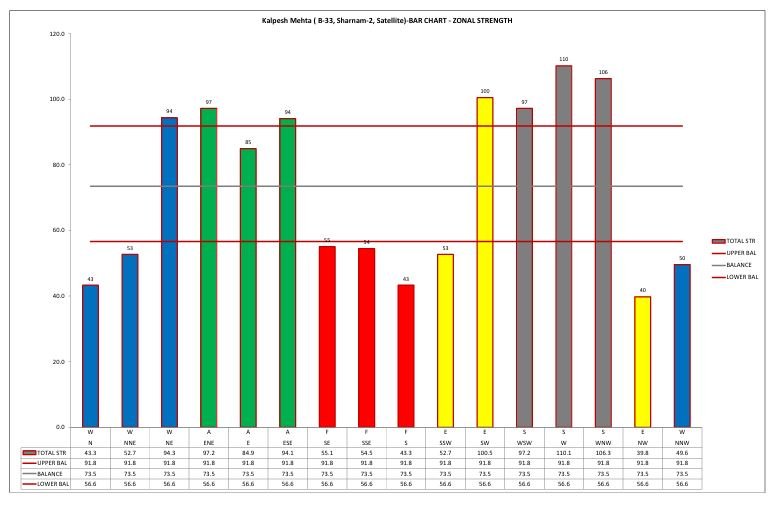
A Bar Chart is used in Vastu to visually represent the energy distribution of a building or plot. It is often employed during the energy assessment phase to show how well the space adheres to the principles of Vastu and where the imbalances lie.
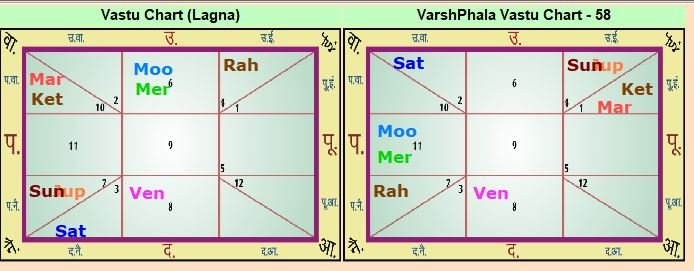
Makan Kundali is the astrological chart of a house. Similar to a person’s Janam Kundali (birth chart), the Makan Kundali uses the time of construction, direction, and planetary positions to determine how the house will influence the lives of its residents.
Each of these concepts plays a critical role in Vastu Shastra, working together to create a space that fosters health, wealth, success, and overall well-being. Understanding and applying these principles allows you to assess and optimize the energies within your living or working environment for maximum benefit. Whether you’re planning a new construction, buying a property, or remodelling an existing space, these tools provide a deeper level of insight and help ensure that the space works in harmony with you and the universe.
In Vastu Shastra, there are various approaches to spatial and architectural design, each offering unique perspectives on how to balance the energies within a building. Among these, three prominent types are Vedic Vastu, Modern Vastu, and Lal Kitab Vastu. Each of these systems brings its own methodology, principles, and remedies to create harmony between individuals and their environments.
Vedic Vastu is the traditional form of Vastu Shastra, deeply rooted in the ancient Vedic texts. It is the original Vastu system that dates back to over 5,000 years ago. Vedic Vastu emphasizes the alignment of structures with the natural and cosmic forces, focusing on the five elements (Earth, Water, Fire, Air, and Space) and their balance within the living or working space.
Prosperity and Health: By correctly positioning rooms like kitchens, bathrooms, and bedrooms in accordance with elemental principles, Vedic Vastu helps enhance wealth, health, and success.
Modern Vastu is a more practical and flexible interpretation of traditional Vastu Shastra. While it still incorporates the foundational principles of Vastu, Modern Vastu adapts these teachings to contemporary construction methods, modern lifestyles, and advanced technologies.
Lal Kitab Vastu is a unique form of Vastu Shastra that comes from the Lal Kitab (Red Book), an astrological and remedy-based text that combines the principles of Vastu with astrology and numerology. It is based on astrological calculations and focuses heavily on remedies to correct imbalances in a property’s energy.